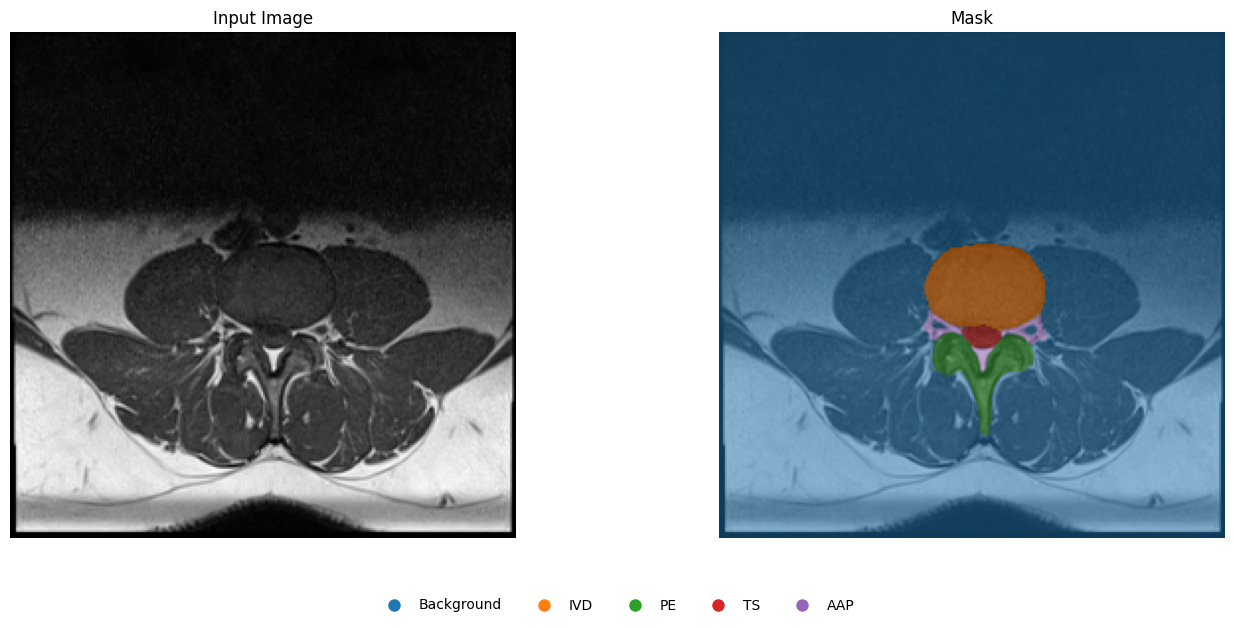
A U-Net with Squeeze-and-Excitation attention that segments five lumbar spine structures from
axial MRI to support diagnosis of lumbar spinal stenosis. Tuned via Weights & Biases
hyperparameter sweeps, it reaches a 92.78% test Dice score — outperforming the published
benchmark on the dataset.
Python
PyTorch
MONAI
Albumentations
W&B
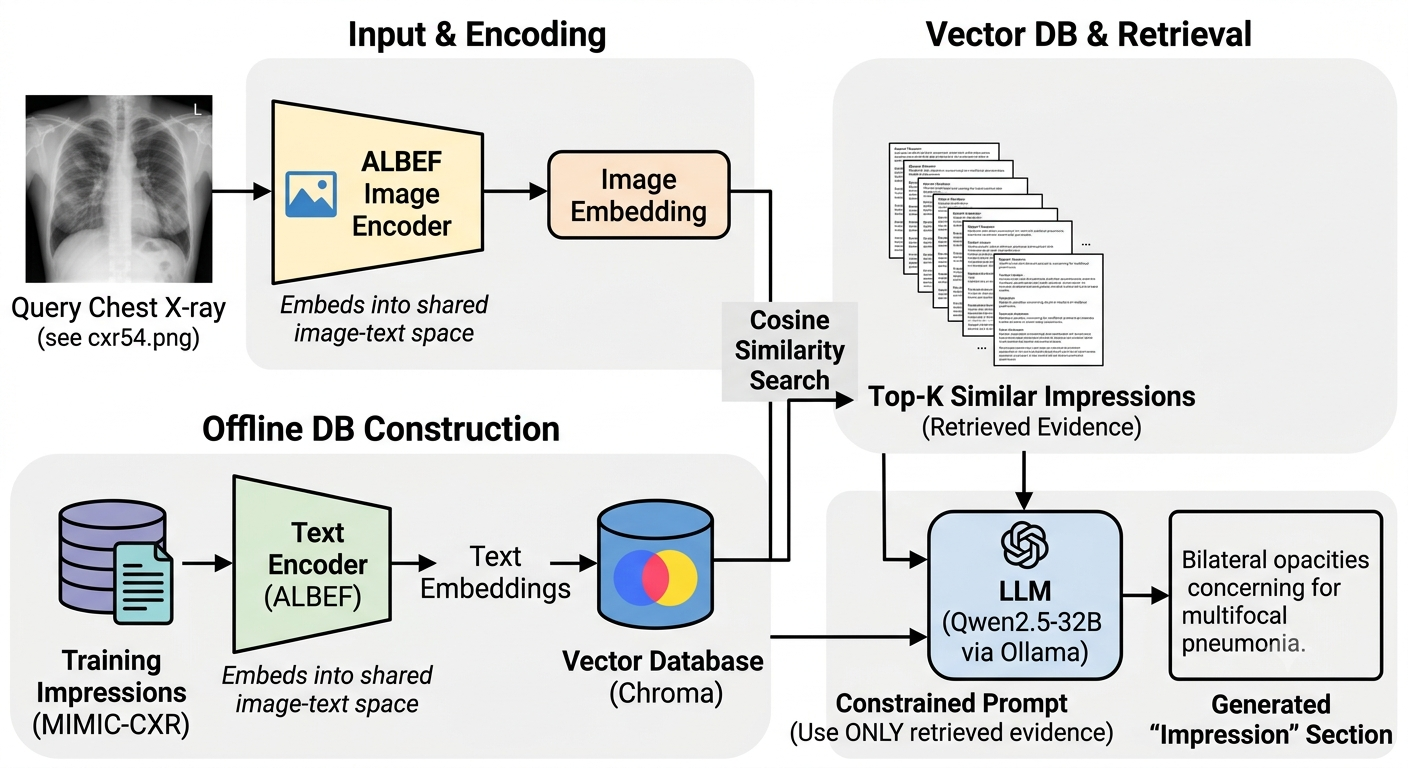
A multimodal Retrieval-Augmented Generation (RAG) system that generates clinically grounded Chest X-ray Impression sections by retrieving visually similar cases from MIMIC-CXR
using an ALBEF image encoder and Chroma vector database. Retrieved reports are passed to a local Qwen2.5-32B model (via Ollama) under evidence-constrained prompting to reduce
hallucinations and improve clinical consistency. The pipeline achieves a CheXbert micro-F1 of 0.363, demonstrating improved factual grounding through retrieval-driven generation
rather than free-form LLM output.
Python
RAG
Vector Databases
LLM
Vision-Language Models
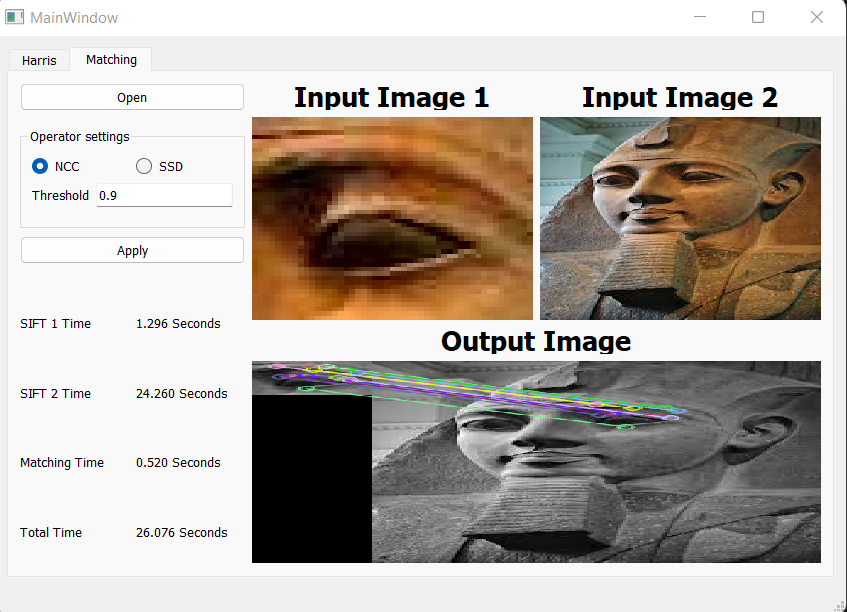
A computer vision library implementing classical CV algorithms entirely from scratch, without
high-level frameworks. It spans edge and feature detection (Canny, Hough, Harris, SIFT),
segmentation (K-Means, Mean-Shift, Otsu), and a complete face detection and recognition pipeline.
Includes an interactive interface for visualizing and testing each algorithm in real time.
Python
C++
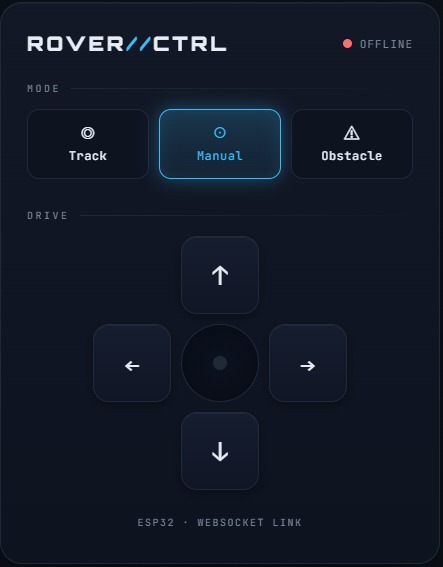
A self-driving car built on Arduino and ESP32, controllable through a Progressive Web App over
WiFi. An onboard camera runs OpenCV lane detection that steers the car autonomously via rule-based
control, and users can switch between manual and self-driving modes from the app.
Python
OpenCV
Arduino
ESP32
Node.js
PWA
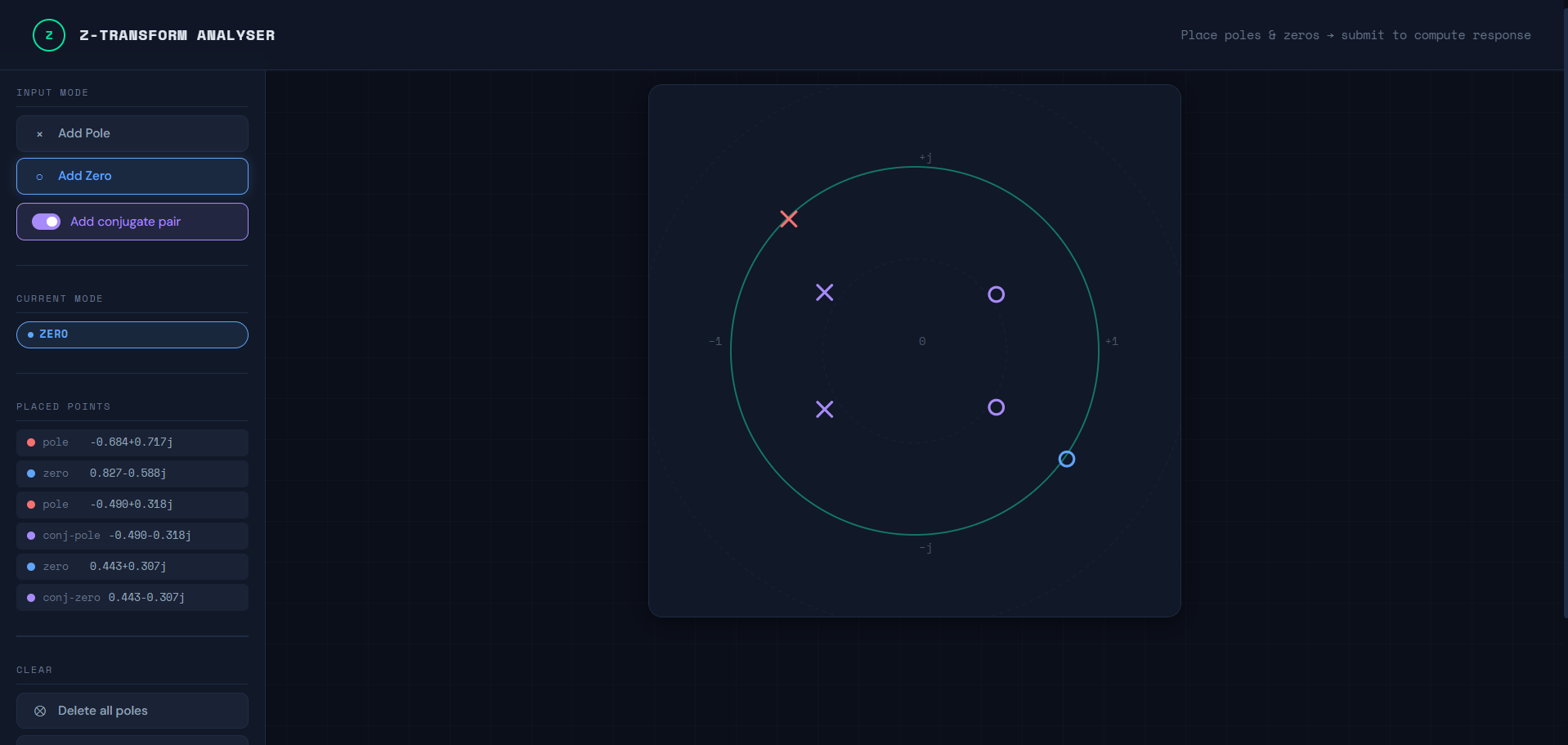
An interactive browser-based tool for designing discrete-time digital filters by placing poles and zeros on the Z-plane.
Submit your design to instantly visualise the magnitude and phase frequency response, with optional all-pass phase correction.
Python
Flask
chart.js
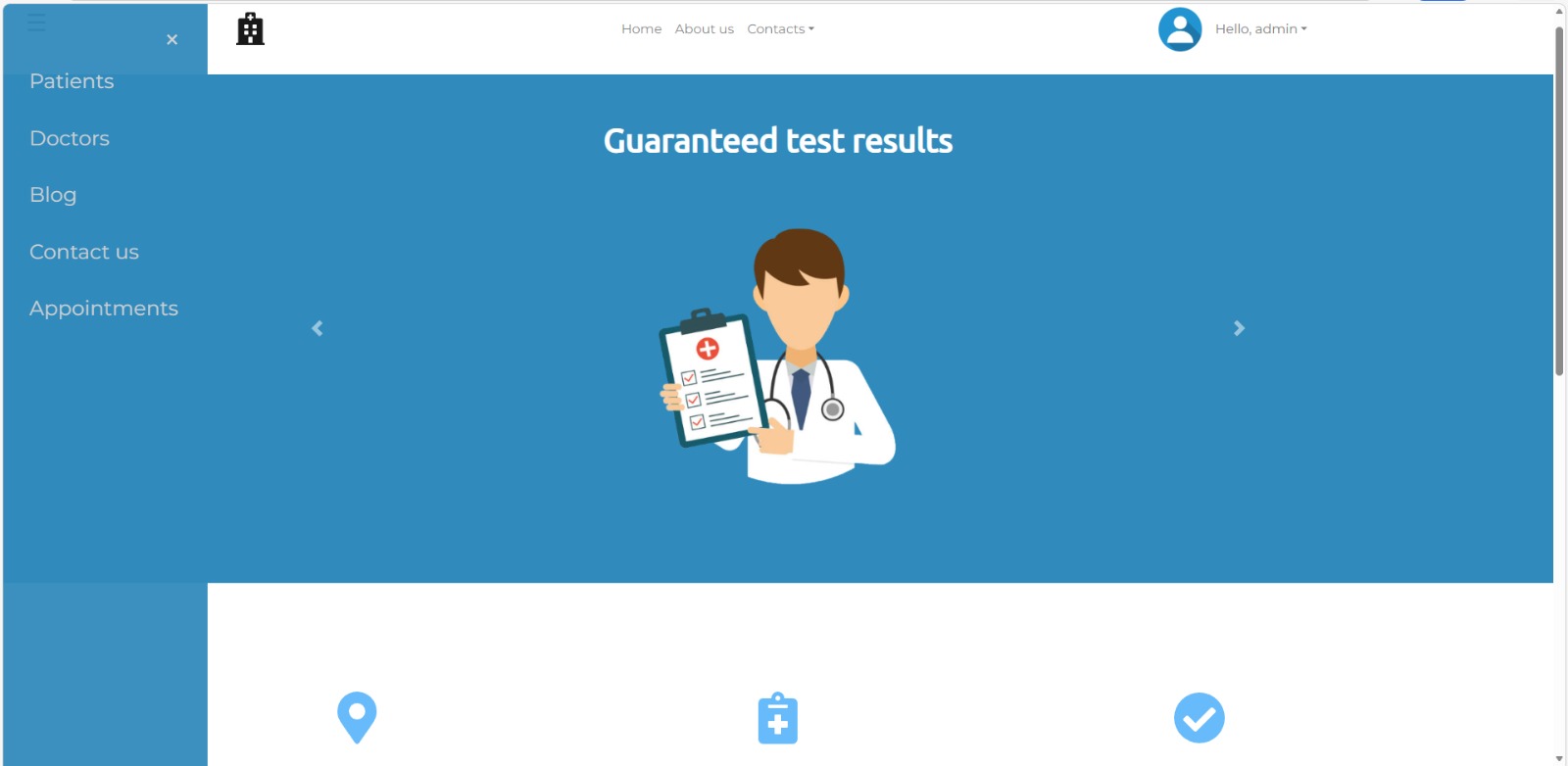
A full-stack web application for managing a hemodialysis clinic, with role-based access for
patients, physicians, and admins. Patients book appointments (synced to Google Calendar via API)
and receive their scans and medical reports online; physicians manage appointments, share reports
with patients, and collaborate through a built-in blog; admins have full control over users,
content, and clinic statistics.
Python
Flask
SQLAlchemy
HTML
CSS
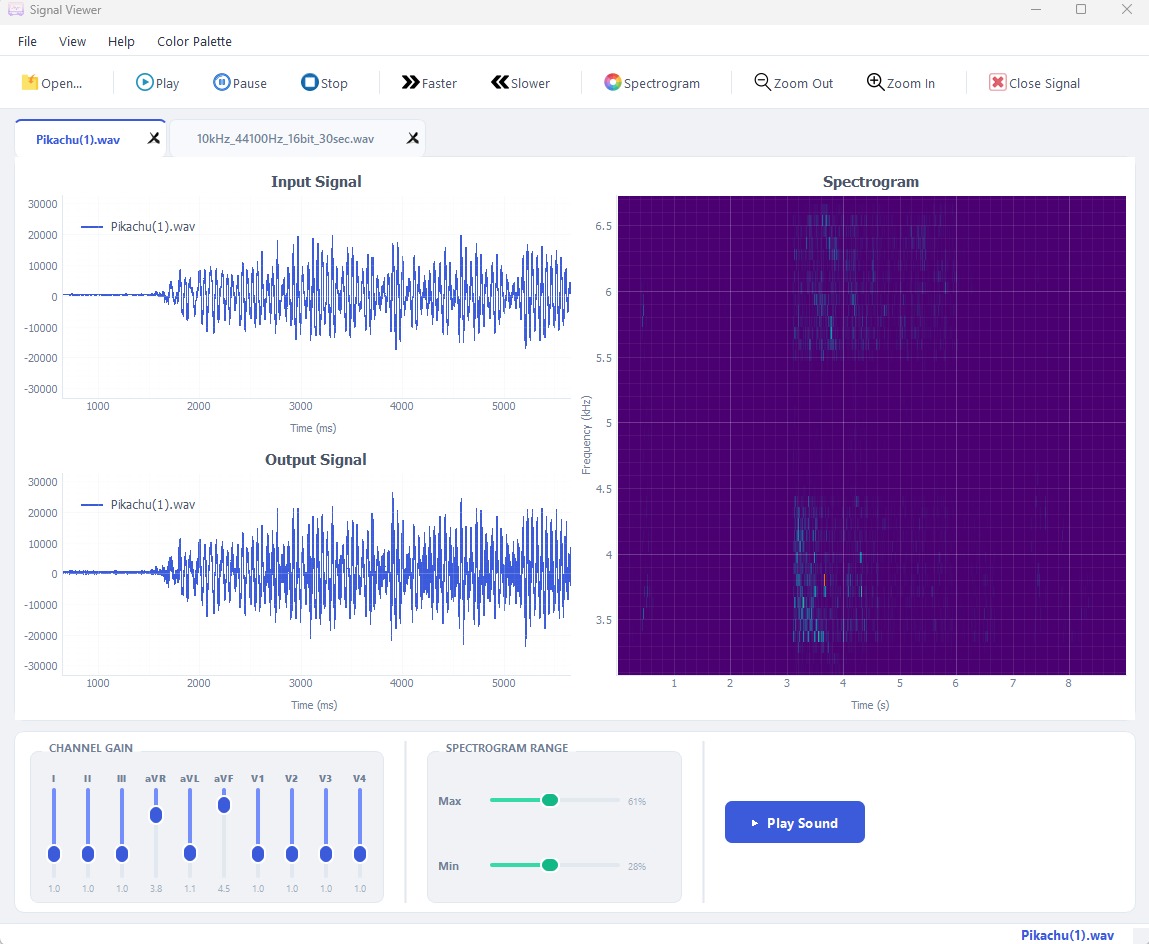
A multi-document desktop DSP application for real-time audio equalization across 10 frequency
bands. Users can play audio, view and animate the signal before and after equalization, and
explore a customizable spectrogram — with all slider settings saved automatically per file.
Python
PyQt
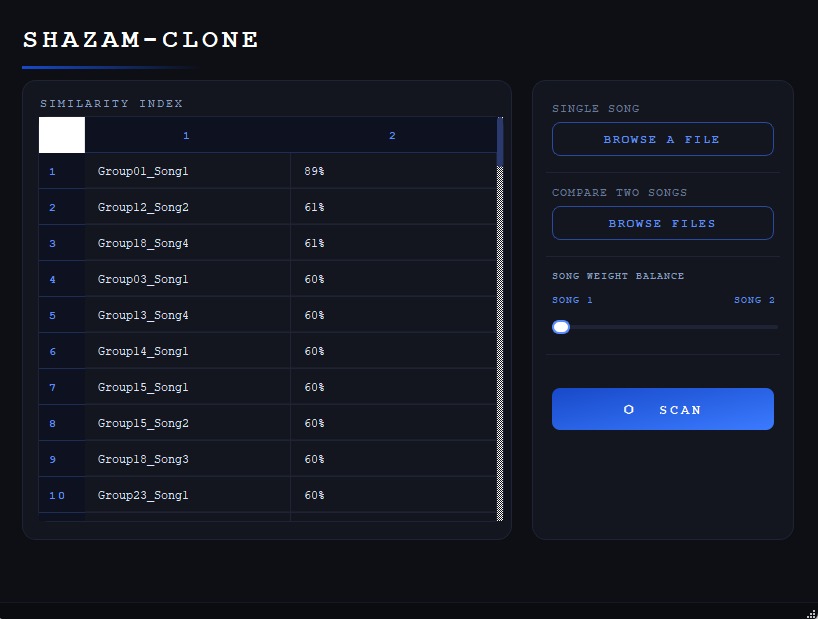
An audio fingerprinting app that identifies songs by their spectral signature. It extracts
mel-spectrogram and MFCC features, hashes them perceptually, and matches a query against a
database using Hamming distance to rank the closest songs. Also supports blending two songs by
a weighted average to find what the mix most resembles.
Python
PyQt
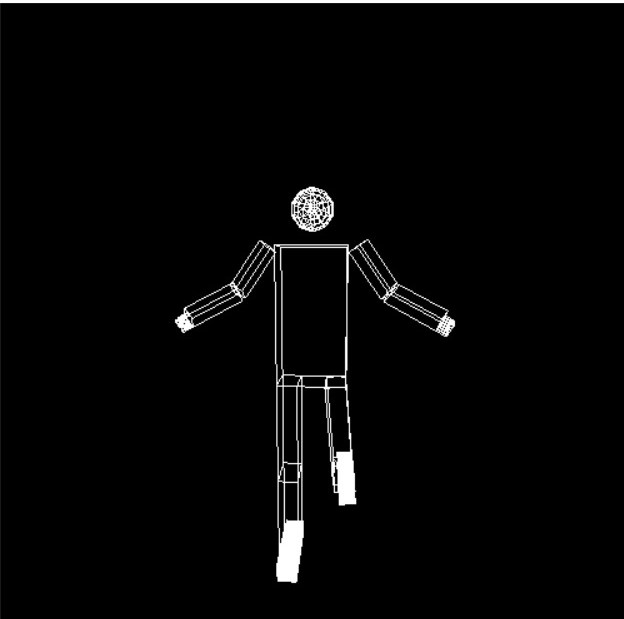
An interactive 3D articulated human figure built with OpenGL and GLUT. Every joint in the body is independently controllable via keyboard,
with full 3D camera navigation using mouse drag and arrow keys.
C
OpenGL
GLUT
Camera mathematics
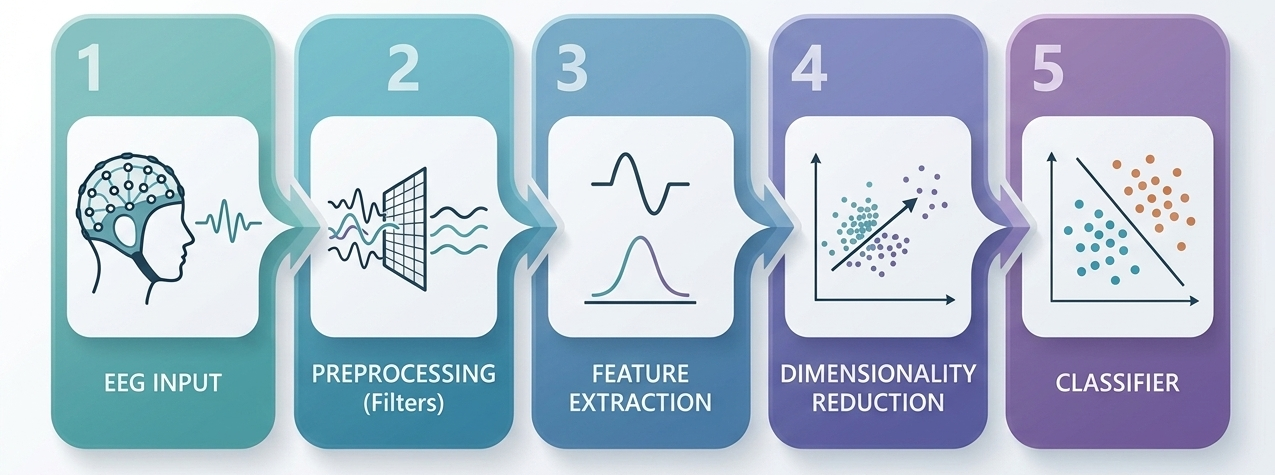
A machine learning pipeline that detects seizure activity in EEG recordings (CHB-MIT dataset).
It combines signal preprocessing and frequency/statistical feature extraction with PCA and an
SVM classifier to distinguish ictal from preictal states.
Python
scikit-learn
PyEEG